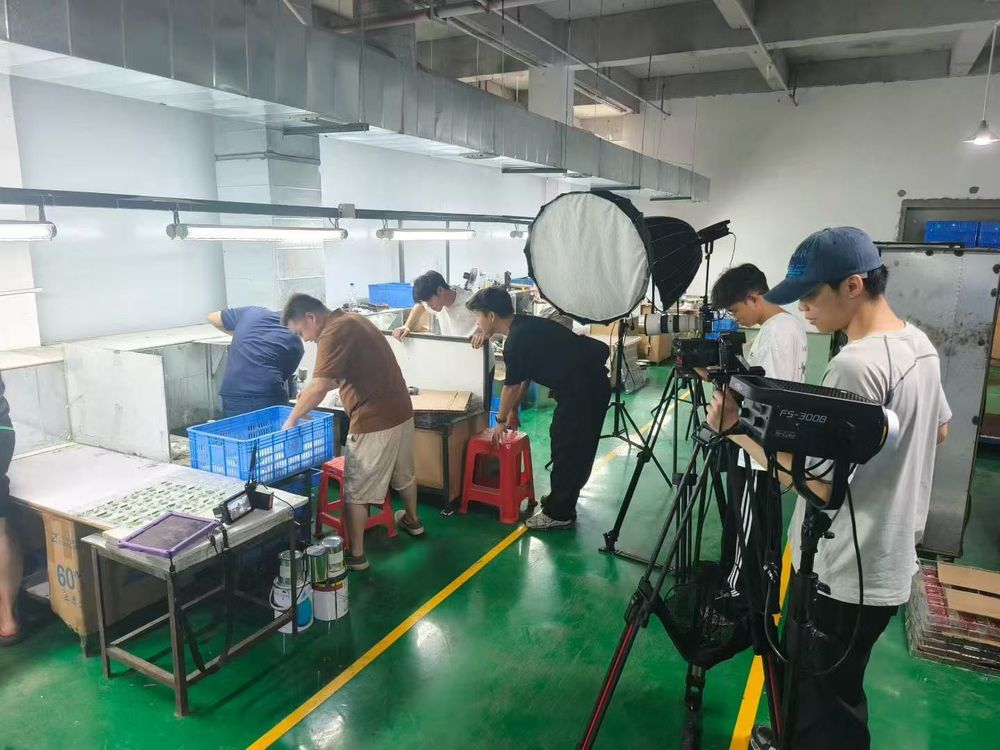
For Dongguan Lisimo's product film, the team needed to show products and the production environment while fitting the factory's schedule. Filming begins with scope, access, product readiness and coordination, then translates those decisions into camera, lighting and crew arrangements.
At the Dongguan Lisimo product-film shoot, cameras, lighting and crew prepare within the production area.
1. Identify what must be shown clearly
Go beyond factory-wide shots. List product appearance, key details, working environments, staff actions and approved processes. Have the site contact confirm which areas, equipment and information may appear, avoiding restricted material.
Prioritise shots: those requiring normal production, details possible during downtime, and demonstrations needing staff. This focuses limited filming time on essential coverage.
2. Fit filming into production
Account for machinery, people, material movement and safety. Agree available windows, routes, equipment states and a contact person. Avoid disrupting normal work, filming wide shots, details and people in separate stages when necessary.
Prepare cameras and lighting before brief production windows. Test composition and exposure from positions that do not obstruct operations, then record when access becomes available. This reduces waiting and helps the factory plan.
3. Use lighting and cameras to explain products
Workshops combine overhead lights, metal reflections, shadows and mixed colour temperatures. Light materials and processes so outlines, surface details and actions are visible without glare, overexposure or equipment shadows hiding the subject.
Balance safety and clarity. Wide shots explain space and workflow; close-ups show details and operations. Keep cameras, stands and cables out of routes and work areas, and confirm every repositioning with the site contact.
4. Turn factory footage into useful product content
Check environment shots, product details, processes and employees against the shot list before editing. Websites need complete information, sales presentations need clear products and capabilities, and short-video platforms can use individual processes and details.
Confirm formats, resolution, subtitles and use cases in the delivery list so material works efficiently for websites, exhibitions, sales and future updates.
5. Preparation advice for manufacturers
Provide product information, selling points, filmable processes, site plans, restricted areas, safety requirements and contact details. Set boundaries for people, customer information, drawings, screens and unreleased processes before filming.
Corporate film planning and production: https://raystudio.art/services/dongguan-xuanchuanpian
Product commercials and videos: https://raystudio.art/services/dongguan-guanggaopian
Multiple-version planning: https://raystudio.art/news/yejwje5irw0d52cdvmuui3be
Product-film brief: https://raystudio.art/contact#project-brief-form
6. Content note
Based on user-confirmed materials from the Dongguan Lisimo product-film shoot, with images authorised for website news. The article describes general manufacturing-video practices and discloses no unconfirmed specifications, clients, processes, schedules, production standards or results.