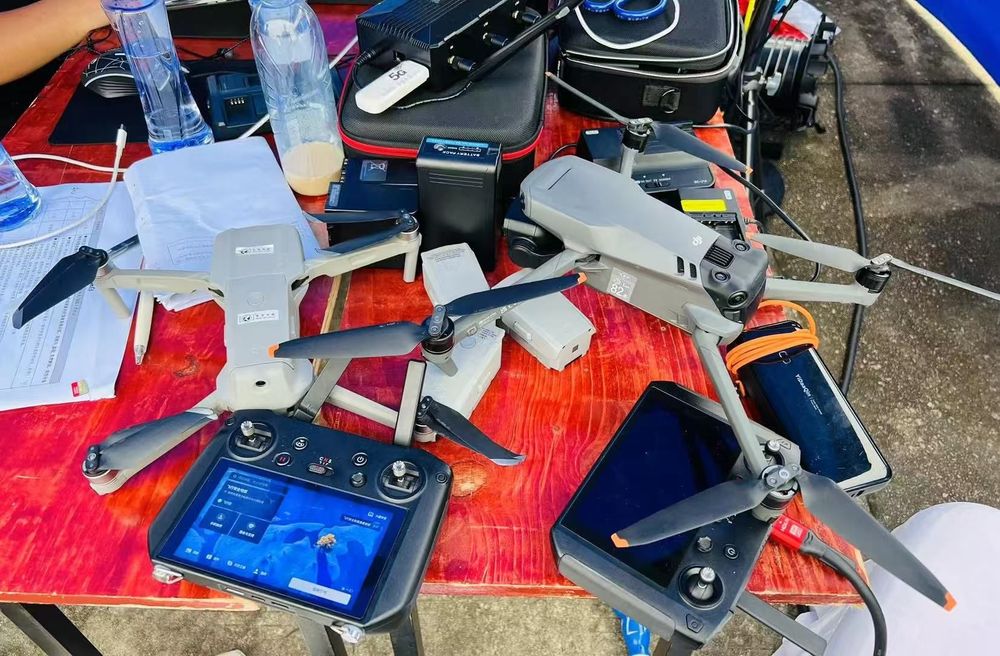
Commercial aerial filming involves more than bringing a drone to site. Corporate and commercial shoots require checks of tasks, locations, equipment, people and contingency arrangements so on-site time can focus on the images needed.
Before aerial filming, inspect the aircraft, controller, batteries, storage media and supporting equipment together.
1. Confirm the task and site boundaries
Clarify whether aerial footage will show a campus, architecture, event scale or a moving transition involving people and products. This determines shots, flight directions, timing and backups.
Have the site contact confirm access, pedestrian areas, vehicle and equipment routes, construction and events. Record excluded areas, prohibited subjects and the communication lead before starting.
2. Inspect more than the aircraft
Check the airframe, propellers, controller, display, batteries, chargers, cards, cables, backup media and cases. Confirm condition, quantities and usable duration to avoid missing power, storage or accessories on site.
Run appropriate startup and image tests for transmission, control, recording and time settings. Identify primary and backup equipment and track battery and card states consistently.
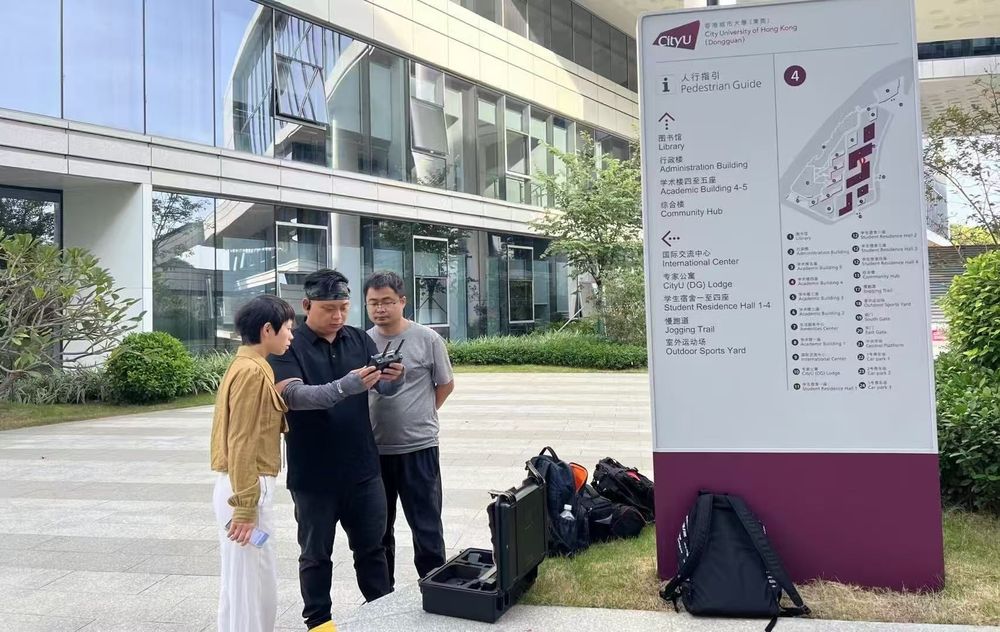
Before outdoor takeoff, crew check the controller and equipment cases beside the location.
3. Plan takeoff, landing and coordination
Keep takeoff and landing areas away from unrelated foot traffic, with space for equipment, operation and communication. Explain when people may enter and when they should keep clear to prevent spectators or vehicles disrupting work.
Assign piloting, observation, ground coordination and media management. Agree who communicates with clients, venues and staff when shots change or filming pauses.
4. Include weather, surroundings and contingencies
Wind, rain, visibility, strong light, electromagnetic conditions and obstacles affect operations. Adjust times, positions and shots or cancel unsuitable flights based on actual conditions. A missing shot is not a reason to ignore risk.
Agree responses to signal, image, equipment or site-control problems: pause, inspect and communicate before deciding whether to continue. Safety decisions depend on that day's conditions and applicable requirements.
5. Review footage and equipment afterwards
Confirm essential shots, then back up footage by project, date and camera. Organise batteries, cards and equipment and label their condition for additional filming or the next location.
Plan aerial footage with ground cameras, interviews, product details and delivery. Retaining the execution checklist also helps future projects.
Corporate film planning and production: https://raystudio.art/services/dongguan-xuanchuanpian
Multiple-version planning: https://raystudio.art/news/yejwje5irw0d52cdvmuui3be
Project brief: https://raystudio.art/contact#project-brief-form
6. References and content note
State Council and Central Military Commission, Interim Regulations on Unmanned Aircraft Flight Management, published 28 June 2023, effective 1 January 2024: https://www.gov.cn/zhengce/content/2023-06/28/content_6888911.htm
Civil Unmanned Aircraft Integrated Management Platform: https://uom.caac.gov.cn/
Prepared by Guangdong RAY STUDIO from authorised on-site photographs and general production workflows. This is project-preparation guidance, not permission to fly or advice on airspace, qualifications or legal compliance. Actual flights must follow current site conditions, authority requirements and applicable rules.