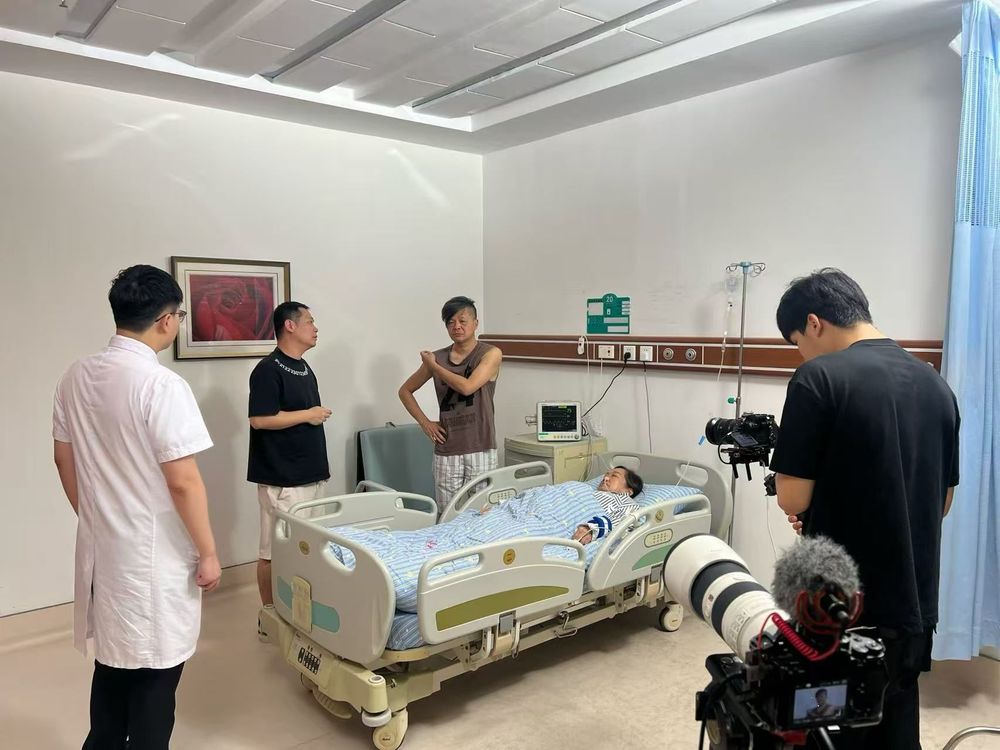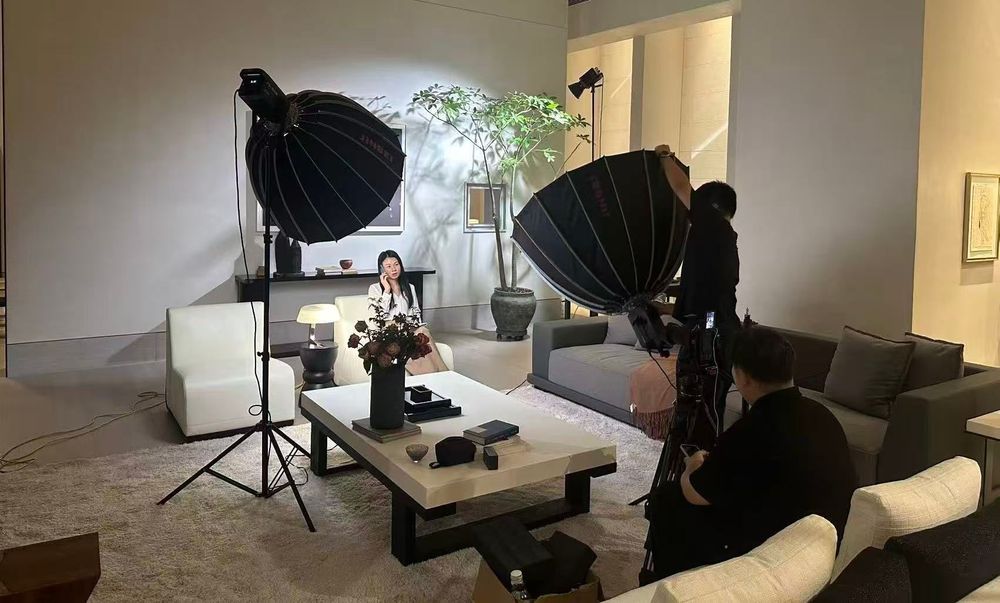
By the Guangdong RAY STUDIO production team
Businesses still need a film that introduces their brand and operations fully. From the outset, however, it is more effective to plan it as a content master, with versions and footage for websites, exhibitions, sales presentations, WeChat Channels, Douyin and recruitment.
What do the industry figures indicate?
The National Radio and Television Administration's 2025 statistical bulletin reports total radio, television and online audiovisual revenue of RMB 1,546.429 billion, up 5.22%. Short video, livestreaming and related revenue reached RMB 479.544 billion, up 11.28%, while programme production, sales and related revenue was RMB 63.645 billion, down 3.45%.
These figures do not establish a decline in corporate-film demand. They cover the broader broadcasting and online audiovisual industry, not the Dongguan or Guangdong corporate-film market. They do indicate a shift towards value from sustained distribution, platform operations, audience reach and reuse, beyond completion of a single film.
Businesses should therefore consider how content can keep working after the shoot.
Why is one finished film often insufficient?
1. Different contexts need different information sequences
Website visitors need to understand the company and its offering quickly. Exhibition viewers may watch without sound. Sales teams need specific processes, products or cases. Short-video audiences respond to a concrete detail, expert insight or on-site question.
A three-to-five-minute film can rarely handle company introduction, product explanation, branding, customer education and short-video distribution equally well.
2. Social platforms need ongoing updates
A website can retain a main film, but Douyin and WeChat Channels need fresh questions, locations and perspectives. Shooting only for a horizontal master and cropping later can leave poorly positioned subjects, incomplete information and insufficient subtitle space.
3. B2B decisions usually involve several stages
A customer may watch a short video, visit the website and then request product information or cases from sales. Each stage needs different depth. One film rarely supports the entire process of understanding, comparison and trust-building.
4. One shoot can create more lasting assets
Once locations, staff, equipment and production areas are coordinated, capturing only one film underuses interviews, processes, product details and team footage. Planning modules in advance usually controls coordination and execution costs better than organising another shoot later.
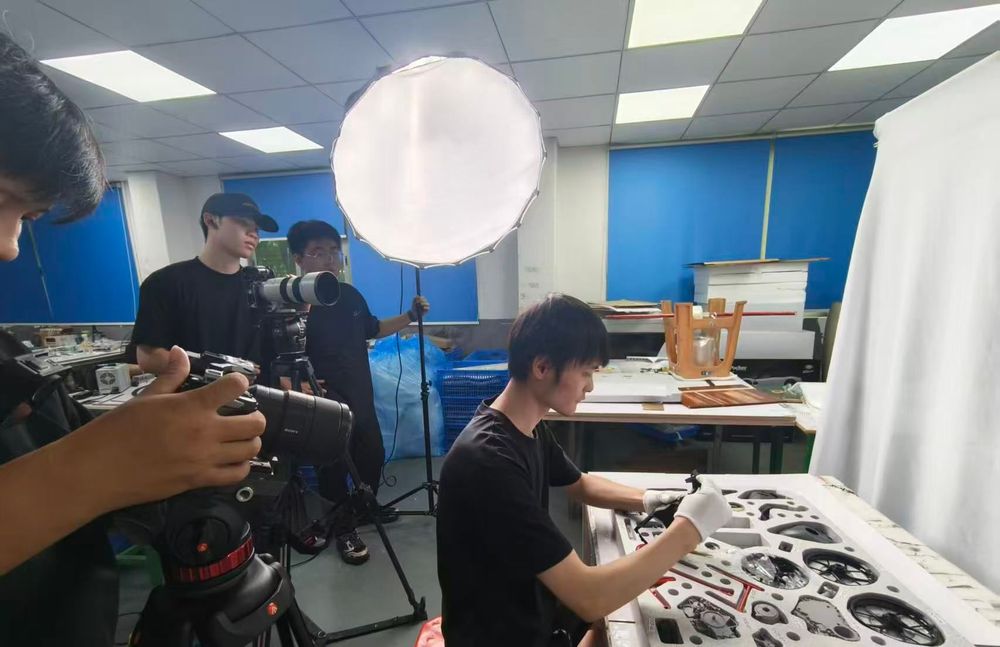
On a factory shoot, staff operations, product structures, process details and environmental footage can be captured together for the main film, business modules and short content.
A structure of master film, modules and short content
Plan these three layers around actual business objectives. They are planning examples; final deliverables depend on budget, use cases and available footage.
Brand master: company positioning, core business, evidence of capability and brand expression for websites, exhibitions, customer introductions and important meetings.
Business modules: products, processes, R&D, service workflows, cases and interviews for sales presentations, product pages and customer discussions.
Short content: on-site details, customer questions, expert insights, behind-the-scenes processes and short cases for WeChat Channels, Douyin, official accounts and recruitment.
For a manufacturer, one shoot can cover the company overview, core products, production, quality management, leadership interviews and employees at work. These can be recombined for different platforms and customer questions instead of squeezing everything into one video.
What should be agreed before filming?
Define the business objective
Is the priority brand credibility, sales conversion, a product launch, business development, recruitment or an exhibition? Each requires different script priorities and versions.
List actual viewing situations
Where will the video appear, who will play it, how long will people watch, will sound be available, and what should viewers do next?
Write modular scripts
Design company, product, process, people, case and call-to-action sections so they can work within the master or independently.
Plan horizontal and vertical formats together
Plan composition, subject positions, shot sizes, subtitle space and actions before filming; do not rely entirely on cropping afterwards.
Set archive rules
Agree how masters, clean versions, short cuts, cover stills and reusable footage will be named, stored and licensed. This makes future product, exhibition and recruitment updates easier.
Four common mistakes
1. Turning the company profile directly into narration, without answering customer questions or providing convincing visual evidence.
2. Cropping every horizontal shot into vertical afterwards, creating conflicts between people, products and subtitles.
3. Delivering only finished films without organising reusable footage, making future updates harder.
4. Judging only views. Website engagement, sales usage, customer understanding and enquiries also matter.
RAY STUDIO's recommendation
Before commissioning a corporate film or annual content programme, ask: What business problem must this solve? Who is it for? Where will it be used? How should it evolve over the next six to twelve months?
These answers provide a better basis for production scale, script structure and deliverables than deciding the film's duration first.
Based in Dongguan, RAY STUDIO provides corporate film planning and production (/services/dongguan-xuanchuanpian) and business short-video operations (/services/dongguan-douyin-daiyunying) across Guangdong. We can plan masters, business modules and short content around website, exhibition, sales and platform needs.
Frequently asked questions
Do businesses with short videos still need a full corporate film?
Usually yes. A full film builds an overall picture for websites, exhibitions, introductions and meetings. Short videos communicate specific questions, product details and on-site stories regularly. Both can draw on the same planned footage.
Do multiple versions always increase the budget substantially?
Not necessarily. Script complexity, filming days, locations, crew, equipment, animation and delivery volume all matter. Early planning lets versions share footage and post-production assets; returning for another shoot may cost more in coordination and execution.
Can existing footage be reused?
Check that it remains accurate, meets quality needs and has appropriate rights for music, performers, fonts, stock assets and customer imagery. Suitable footage can be combined with new material. Outdated or uncleared material should not be used directly.
Prepare your objectives, channels, existing footage and desired versions, then discuss the production plan with RAY STUDIO through the project brief form (/contact#project-brief-form).
Reference